

 Facebook
 X
X
 Pinterest
 Copy Link
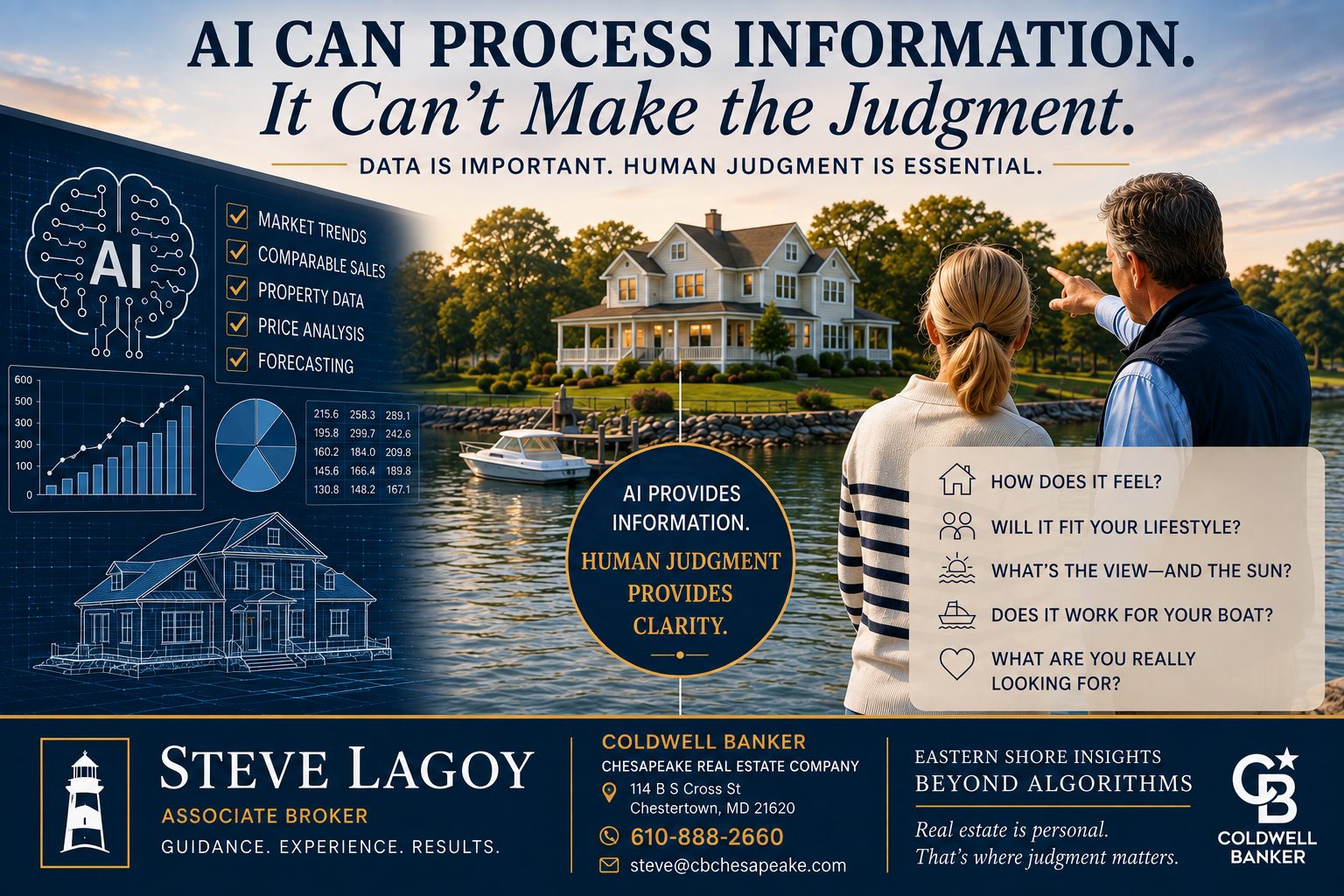
AI Can Process the Information. It Can’t Make the Judgment.
Artificial intelligence will change the way we buy and sell real estate. It will make information more accessible, searches more sophisticated and analysis faster.
But information is not judgment. And a real estate decision is not simply an information issue.
It is a human decision about a particular property, a particular buyer and a particular life.
Artificial intelligence is exceptionally good at processing information.
In real estate, that means it can analyze thousands of transactions, compare properties, identify market patterns, calculate financial scenarios and organize an extraordinary amount of information in seconds.
But there is a fundamental distinction between processing information and exercising judgment. And that distinction matters. A property is not simply a collection of data points. Neither is a buyer. And the decision to purchase a home is rarely just a calculation.
Consider a waterfront property.
An AI system might be able to tell you:
- the square footage;
- the number of bedrooms and bathrooms;
- the lot size;
- the assessed value;
- recent comparable sales;
- the asking price;
- the estimated market value;
- the distance to the nearest town;
- and perhaps even the property’s likely future value.
All useful information. But none of those numbers answers a more important question:
What is this particular property actually like as a place to live?
Is the shoreline usable?
Is the water deep enough for the buyer’s boat?
What about silting and its effect on MLW (mean low water)?
How does the property feel when the wind blows across the creek?
Is the view beautiful in a way that will still be enjoyable after living there through the seasons? For several years?
Does the house work for the way the buyer actually lives—or does it merely look good on paper?
Those questions require more than information. They require judgment.
The same is true of the buyer.
Suppose two buyers tell Artificial Intelligence that they are looking for:
“A three-bedroom, two-bath home on the Eastern Shore, preferably near the water.”
The algorithm has a perfectly reasonable starting point.
But the two buyers may have completely different objectives.
One may want a weekend retreat. The other may be planning a permanent move.
One may spend every weekend on a boat. The other may care far more about restaurants, friends and proximity to an airport.
One may want privacy and acreage. The other may want to walk into town for coffee every morning.
The search criteria may be identical. The right property may not (most likely will not) be.
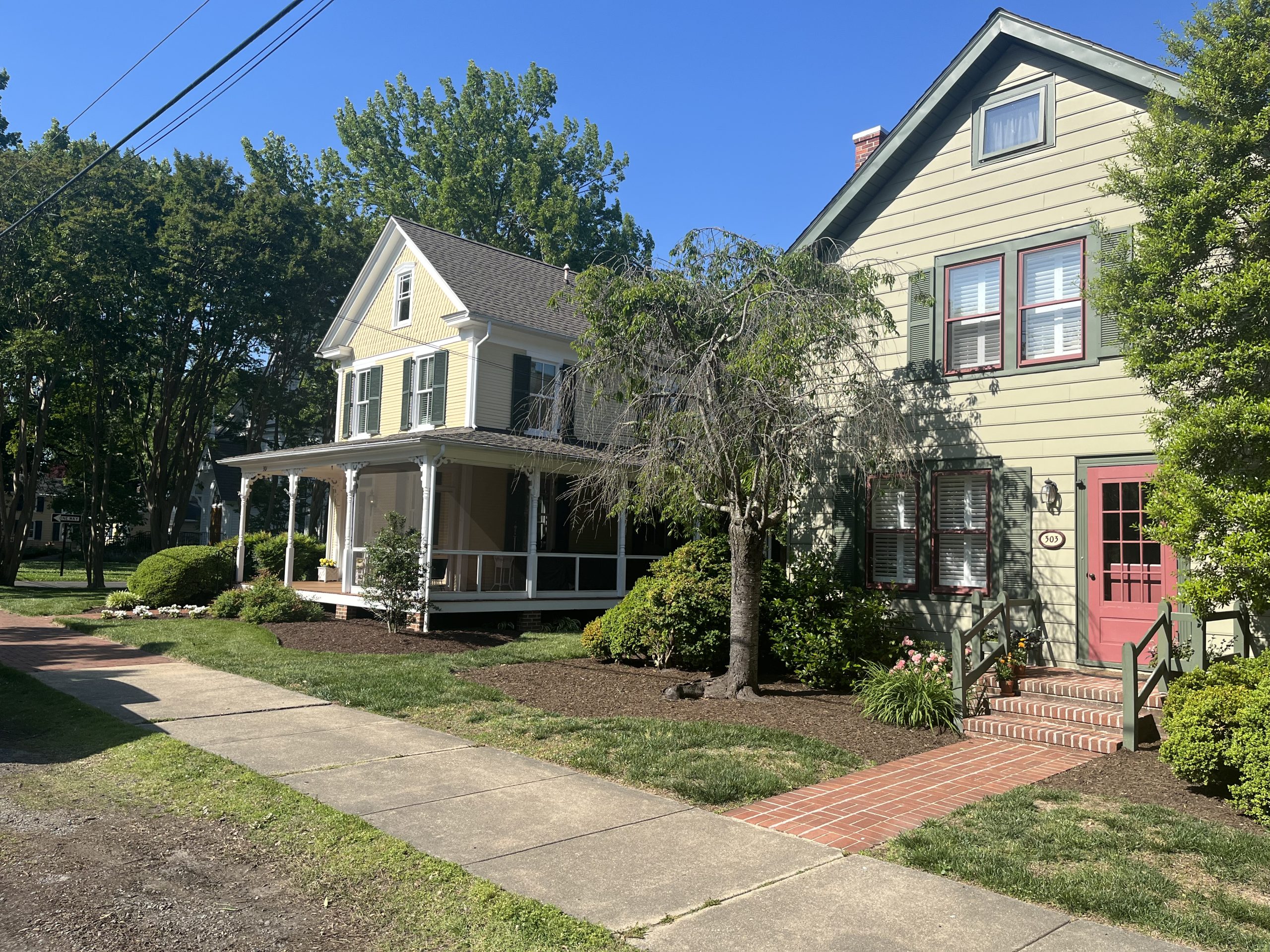
That is where human judgment enters the process.
A good real estate professional isn’t simply matching a buyer with a database of properties. The professional is continually interpreting information:
What did the buyer actually mean when they said “waterfront”?
Why did they linger at that particular house?
What bothered them about the last property even though they couldn’t quite articulate it?
Is the issue really the house—or is it the lifestyle the house represents?
Those aren’t questions an algorithm knows to ask. They’re most certainly questions that they know how to answer well…if at all!
And then there is the property itself.
Every property has a story that isn’t completely captured by its listing. Maybe the house has been beautifully maintained but has an awkward addition. Maybe the location is exceptional but the access road is less convenient than it first appears. Maybe the price looks high compared with the comps, but the property has characteristics that aren’t easily reflected in a spreadsheet. Or perhaps the opposite is true.
The numbers may look compelling, while an experienced eye sees something that deserves closer examination.
Judgment doesn’t replace information. It puts information into context.
That distinction is becoming increasingly important as AI becomes more capable.
The answer is not to ignore artificial intelligence. Quite the opposite.
I expect AI to become an increasingly valuable tool for buyers, sellers and real estate professionals. Use it. Question it. Learn from it.
But don’t confuse its ability to process enormous amounts of information with the ability to understand what that information means in a particular situation.
After all, real estate decisions are ultimately personal decisions.
The property is particular. The buyer is particular. And the circumstances surrounding the decision are particular.
That is why I don’t see the future relationship of AI and the real estate professional real estate as antagonistic or mutually exclusive. I see it as complimentary.
Let AI do what it does best:
Find the information.
Organize the information.
Analyze the information.
Then let an experienced human answer the harder question:
“So what does all of this mean for you?”
That’s the part of real estate that can’t be reduced to an algorithm.
______________________________________________________________
Eastern Shore Insights™: Beyond Algorithms. A series of articles examining the capabilities and limitations of Artificial Intelligence in real estate transactions on Maryland’s Eastern Shore
by Steve Lagoy
Coldwell Banker Chesapeake
114 S Cross St Ste B, Chestertown. MD 21620
steve@cbchesapeake.com
www.isellmdes
MD 5014893
(410) 778-0330 (office); (610) 888-2660 (mobile)
